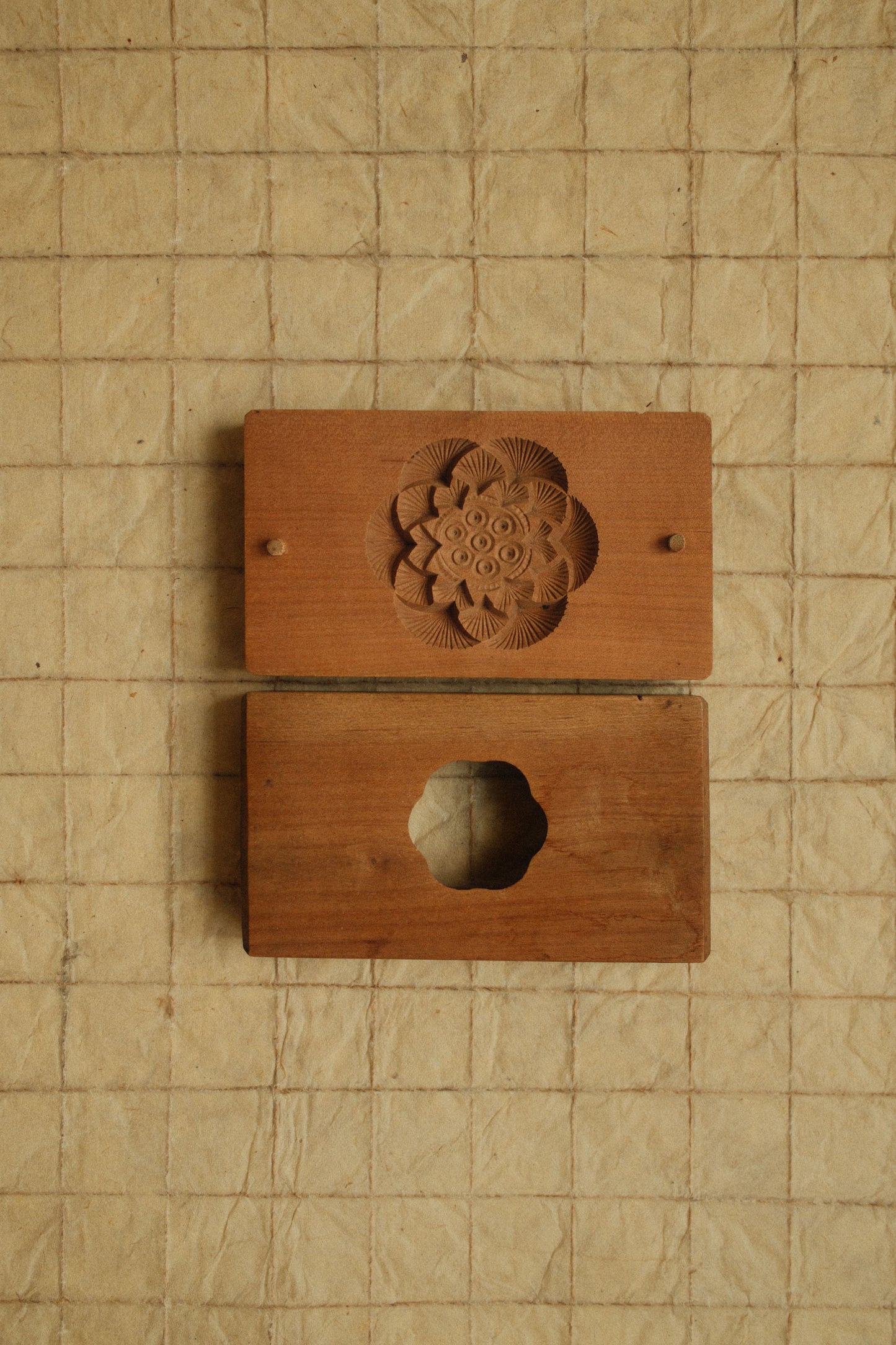


Kashigata Wagashi Press - Plum Blossom
Kashigata Wagashi Press - Plum Blossom
Couldn't load pickup availability
The Item
Carved from kiri (paulownia) wood, these kashigata molds were once used in the making of wagashi, the intricate, seasonal sweets served with tea in Japan. Each mold captures a moment in relief: a folding fan, a pine and sun motif, and a single plum blossom.
Their surfaces bear the quiet traces of use: smooth from handling, chipped from use, and stained by sugar and time. Today, they stand as sculptures of negative space: tools that once shaped beauty, now beautiful in themselves.
The Craft
Kashigata were traditionally used by wagashi-shi (confectionery artisans) to press doughs made of rice flour, bean paste, and sugar into celebratory forms. Each motif carried symbolic meaning: the fan for growth and good fortune, the chrysanthemum for longevity, the plum blossom for endurance and renewal.
Carved by hand with chisels by skilled artisans, their geometry and flow were designed not only to please the eye but to release sweets cleanly. Precision in service of impermanence.
The Tradition
In Edo-period Japan, wagashi mirrored the rhythm of the seasons and the sensibilities of chanoyu (the tea ceremony). Artisans collaborated with carvers to design molds that reflected festivals, weather, and poetic imagery. The craft reached its height in Kyoto and Kanazawa, where confectioners were regarded as both technicians and poets of form.
The kashigata thus embodies a larger aesthetic idea: that beauty can exist in transience, and that the act of making, no less than the object itself, is an art.
The Culture
Today, antique kashigata are collected not for their utility but for their quiet presence, a balance between void and relief, utility and grace. They recall a time when even a sweet was a form of philosophy: a meditation on nature, craftsmanship, and the fleeting pleasure of the present.
Each is a relic of Japan's less hurried, pre-industrial past, when art was found not only in what was made, but in the tools that made it.
Share