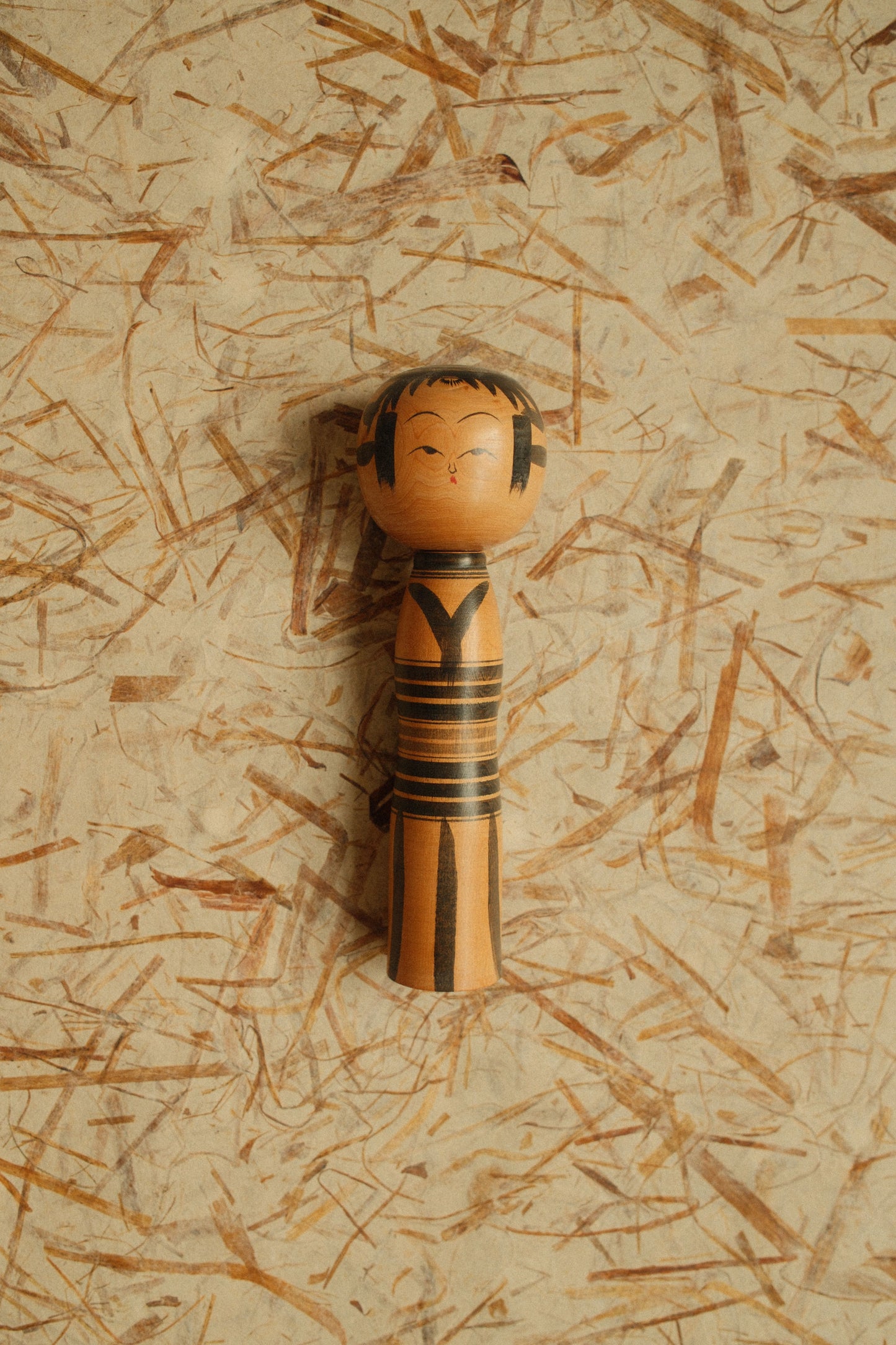

Kokeshi Doll by Niiyama Minoru (Togatta-Kei, Miyagi Prefecture)
Kokeshi Doll by Niiyama Minoru (Togatta-Kei, Miyagi Prefecture)
Couldn't load pickup availability
The Item
Turned from mizuki (dogwood) wood and finished by hand, this kokeshi by Niiyama Minoru exemplifies the quiet power of the Togatta lineage. Its sharply tapered form and deep black banding create a rhythm both architectural and human, minimal yet full of character. The painted mabuta (eyelids) and pursed lips convey a serene, almost knowing expression, while the dark palette lends the piece a modern, sculptural gravity uncommon among its peers.
No two kokeshi are identical and every mark is intentional. The contrast of black against the warm grain of wood evokes the elemental simplicity that defines Japanese folk design.
The Designer
Niiyama Minoru (新山 實) is part of the Niiyama family line of kokeshi makers from Togatta Onsen, Miyagi Prefecture—a lineage renowned for its purity of form and painterly restraint. His work reflects both fidelity to tradition and subtle experimentation: a dialogue between inheritance and individuality. Each doll carries the quiet imprint of Minoru’s hand, its imperfections adding to its vitality.
The Tradition
The Togatta-kei is the oldest among the six traditional kokeshi schools of the Tōhoku region, originating as souvenirs sold to travelers visiting the region’s volcanic hot springs during the late Edo period. Characterized by long, narrow bodies and finely painted linear motifs, the style is both humble and elegant—rooted in the rhythms of rural craftsmanship and the flow of mountain life.
The Culture
In Japan, kokeshi are often said to embody the spirit of yasashisa—gentleness, simplicity, and emotional warmth. Over time, they’ve come to represent both nostalgia for rural craftsmanship and the enduring beauty of imperfection. To hold one is to feel the intimacy of handwork, the rhythm of seasonal life, and the quiet persistence of a tradition kept alive through care.
Share