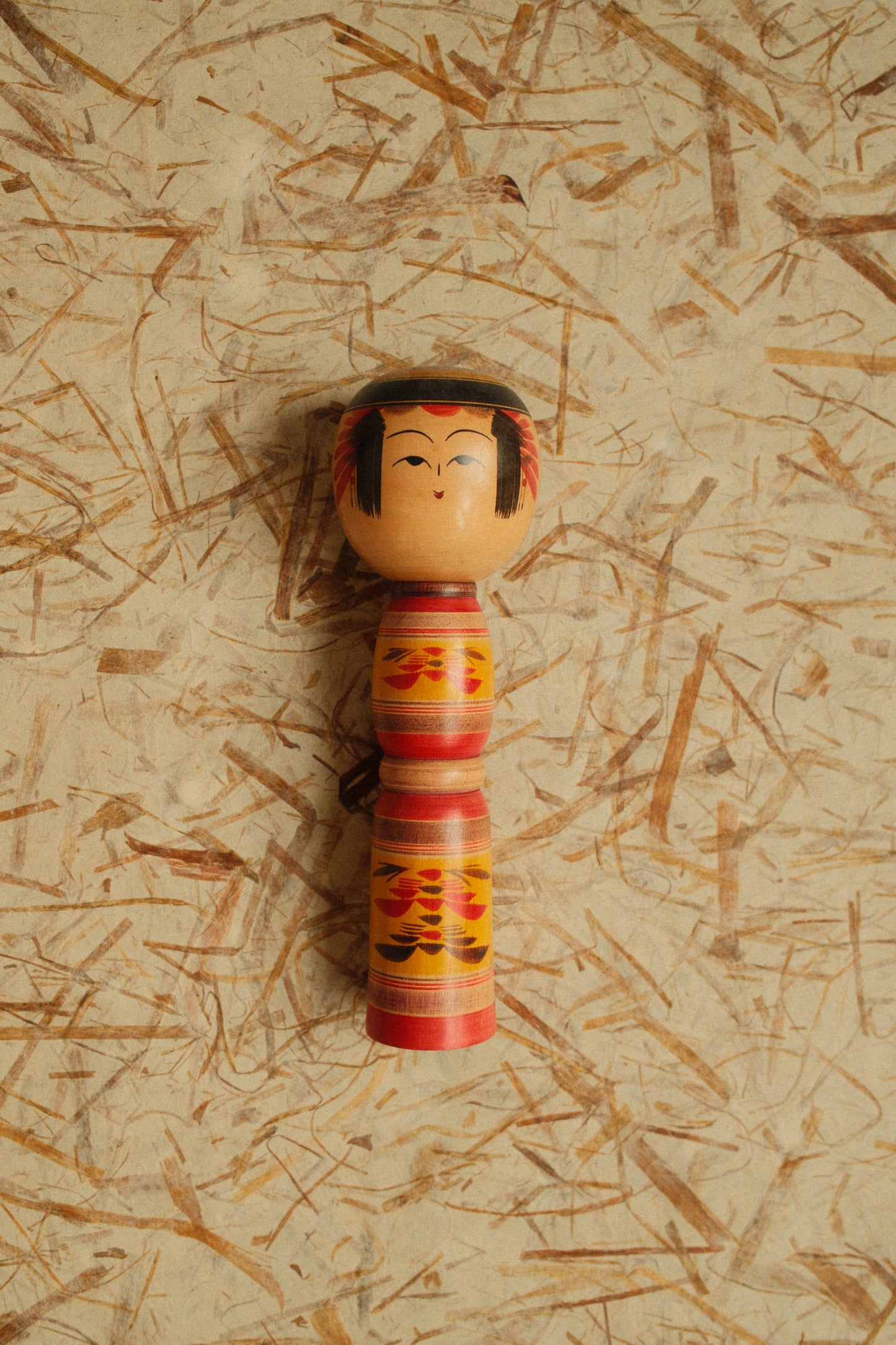

Kokeshi Doll by Satō Minosuke (Yajiro-Kei, Miyagi Prefecture)
Kokeshi Doll by Satō Minosuke (Yajiro-Kei, Miyagi Prefecture)
Couldn't load pickup availability
The Item
Turned from mizuki (dogwood) wood and hand-painted in vivid red, yellow, and black, this kokeshi by Satō Minosuke represents the exuberant charm of the Yajirō-kei tradition. The stacked, barrel-like form and rhythmic bands of color are characteristic of the region’s design: playful, yet perfectly balanced.
Minosuke’s brushwork is confident and generous: petals unfold like bursts of safflower, while the doll’s calm, open face radiates warmth and humility. The contrast between the bright pigments and the natural wood grain embodies the Japanese ideal of harmony between nature and artifice.
The Designer
Satō Minosuke (佐藤 巳之助) was a mid-century kokeshi craftsman from Yajirō Onsen, Shiroishi City, in southern Miyagi Prefecture. Working within a lineage famed for its bold coloration and expressive faces, he carried forward the spirited personality of the Yajirō-kei while refining its proportions and precision. His pieces stand out for their generosity of line and their unpretentious joy, objects meant to be touched, not simply admired.
The Tradition
The Yajirō-kei (弥治郎系) lineage emerged in the late Edo period from the mountain hot-spring villages of southern Miyagi and northern Fukushima. Distinguished by their round heads, black hair caps with red floral accents, and vivid geometric motifs, Yajirō dolls embody a rustic exuberance that feels both folk and modern. Each generation of artisans inherits not only a technique but a rhythm, a cadence of turning, painting, and polishing that anchors the work in living tradition.
The Culture
In Japan, kokeshi are often said to embody the spirit of yasashisa: gentleness, simplicity, and emotional warmth. Over time, they’ve come to represent both nostalgia for rural craftsmanship and the enduring beauty of imperfection. To hold one is to feel the intimacy of handwork, the rhythm of seasonal life, and the quiet persistence of a tradition kept alive through care.
Share