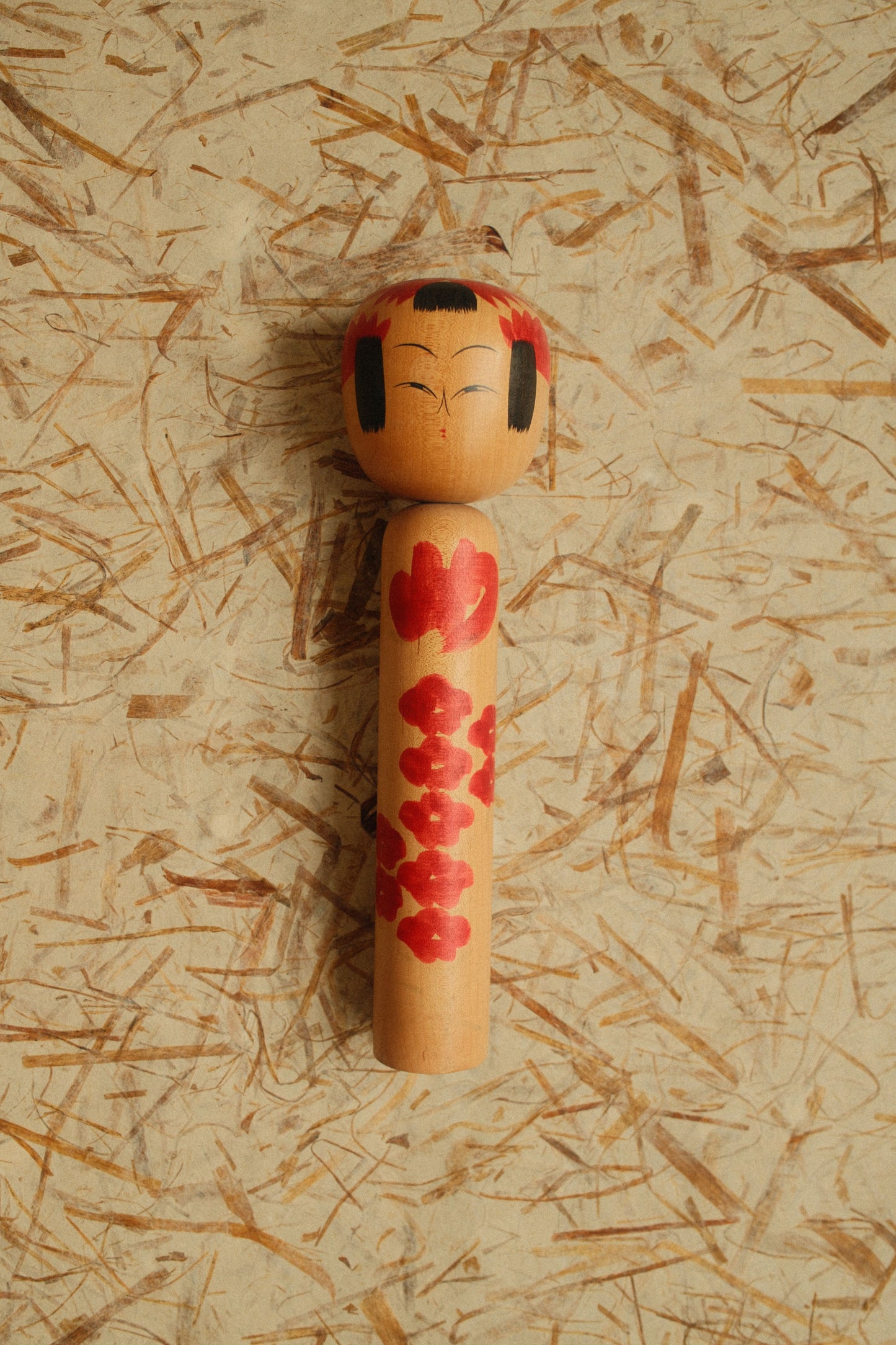

Kokeshi Doll by Niiyama Yoshinori (Togatta-Kei, Miyagi Prefecture)
Kokeshi Doll by Niiyama Yoshinori (Togatta-Kei, Miyagi Prefecture)
Couldn't load pickup availability
The Item
Carved from mizuki (dogwood) wood and hand-painted in vivid red and black, this kokeshi by Niiyama Yoshinori represents the quiet refinement of the Togatta school. The doll’s elongated neck, soft shoulders, and cascading benibana (safflower) motif are signatures of the style—balanced, feminine, and slightly melancholic.
Each face is delicately brushed with fine black lines and a gentle flush across the cheeks, evoking the modest, composed expression characteristic of Tōhoku artisanship. Its minimal form conceals an extraordinary precision: symmetry held in tension with the irregularities of the hand.
The Designer
Niiyama Yoshinori (新山 義徳) is a contemporary kokeshi craftsman working in Togatta Onsen, Miyagi Prefecture, where the tradition dates back over two centuries. Known for his elegant restraint and painterly control, Niiyama continues the legacy of the Niiyama family lineage, emphasizing the subtle individuality of each piece rather than strict replication—a living testament to the handmade spirit of the craft.
The Tradition
Kokeshi dolls originated in the late Edo period (1603–1868) as children’s toys and souvenirs for visitors to the hot springs of northern Japan. Artisans in each village developed their own distinctive styles, reflecting regional character and aesthetic sensibility.
The Togatta-kei lineage is the oldest of the six canonical kokeshi schools, emerging in the late Edo period as hot spring souvenirs for visitors to the mountain spa town of Togatta. Its dolls are distinguished by a small head, long tapering body, and decorative floral patterns rendered in vivid vermilion. The safflower design, in particular, symbolizes warmth and vitality, echoing the geothermal life of the region itself.
The Culture
In Japan, kokeshi are often said to embody the spirit of yasashisa—gentleness, simplicity, and emotional warmth. Over time, they’ve come to represent both nostalgia for rural craftsmanship and the enduring beauty of imperfection. To hold one is to feel the intimacy of handwork, the rhythm of seasonal life, and the quiet persistence of a tradition kept alive through care.
Share