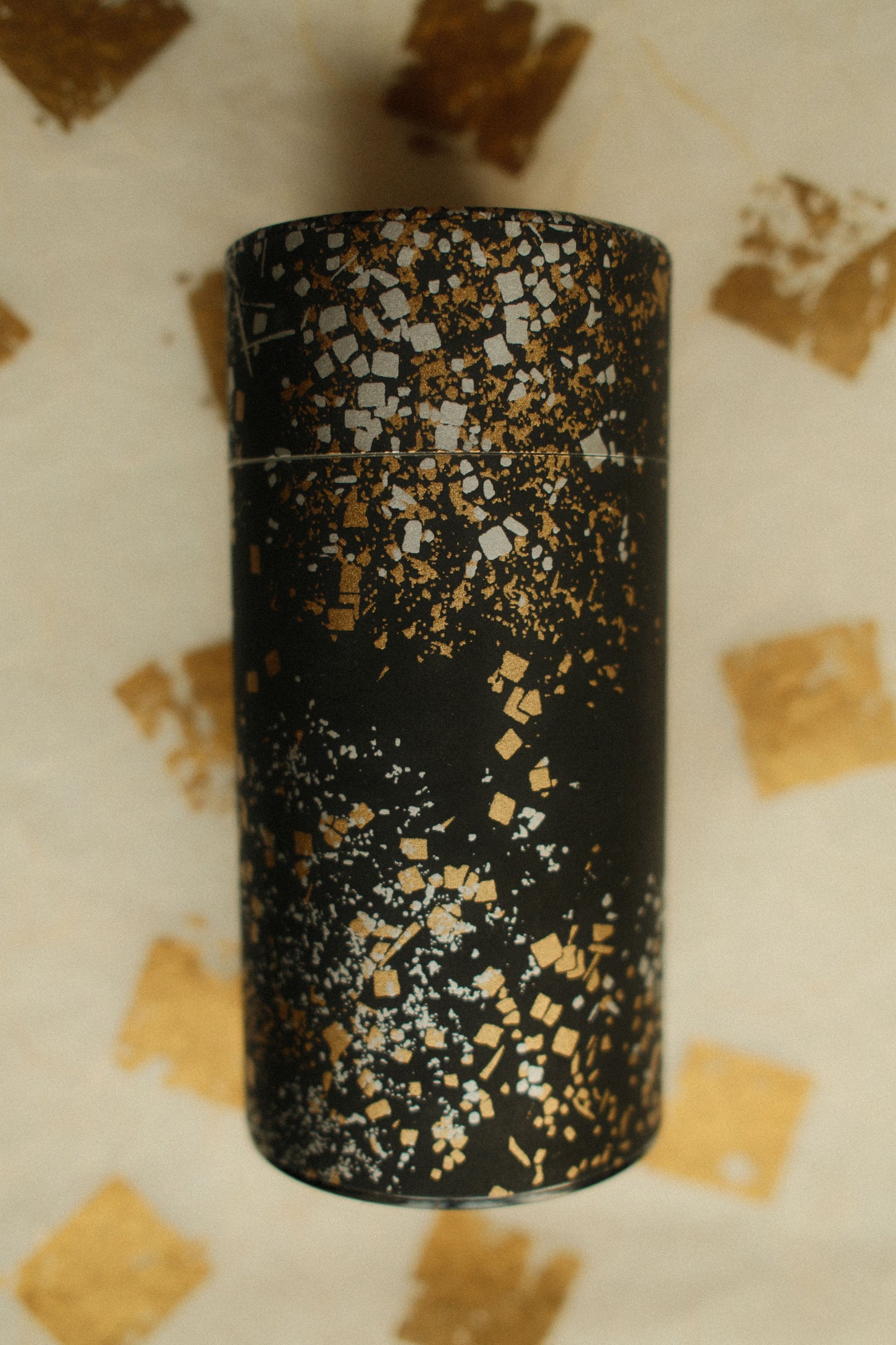

Kotodo Washi-Wrapped Tea Tin (Kirikane)
Kotodo Washi-Wrapped Tea Tin (Kirikane)
Couldn't load pickup availability
AVAILABLE FOR PRE-ORDER (NOTE: THESE ARE SAMPLES.)
The Item
Handcrafted from aluminum tinplate and wrapped in Japanese washi paper, each Kotodo canister is an object of both beauty and precision. Its airtight, double-lid design preserves the freshness and aroma of tea, while the seamless wrapping and perfectly aligned patterns reveal the quiet perfectionism of Japanese craftsmanship.
We’ve selected four of our favorite patterns in the traditional gold-on-black palette—long favored in washi-wrapped objects like tea canisters for its elegance and auspiciousness. This color pairing has historically signified understated luxury and longevity.
Available Washi Patterns: Kikkō-hana (Chrysanthemum), Asanoha (Hemp Leaf), Kikkō-mon (Tortoiseshell), and Kirikane ("Cut Gold").
The Brand
Founded in 1910, Kotodo (江東堂) has been producing handmade tea canisters for over a century. Compared to machine-made versions, their washi wrapping is completely seamless—no ridges, no interruptions where the lid meets the body—resulting in an exceptionally clean silhouette. Each lid is designed to rotate counter-clockwise until it clicks, ensuring the pattern aligns flawlessly, a small but satisfying ritual that embodies the Japanese pursuit of harmony and precision.
The Tradition
Tea canisters, or chazutsu, have long been a part of Japan’s tea culture, prized not only for their utility but for their ability to elevate everyday life. Historically, chazutsu were handcrafted by metalworkers and paper artisans, combining airtight construction with decorative beauty. The use of washi—a paper made from mulberry fibers—adds a tactile warmth and subtle variation that only grows richer with time.
The Culture
In Japan, the preservation of tea is both a practical concern and a cultural expression of respect: for nature, for the material, and for the act of drinking tea itself. The Kotodo canister reflects this philosophy, suggesting even the smallest gesture can embody elegance and care. To open one is to participate in a century-old dialogue between hand, material, and ritual.
Share